President Bola Tinubu has forwarded the National Secondary Education Commission (Amendment) Bill, 2026, to the Senate, seeking legislative approval for reforms aimed at strengthening the administration and governance of public senior secondary education in Nigeria.
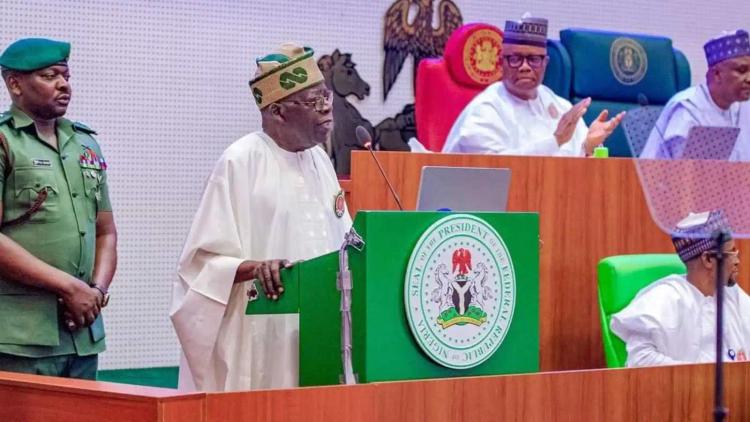
The executive bill was sent to the Senate through Senate President Godswill Akpabio, who read the President’s letter during Thursday’s plenary.According to the letter, the proposed legislation is designed to improve the management of senior secondary education in Nigeria.
President Tinubu stated that the Federal Executive Council (FEC) approved the amendment bill at its meeting on April 30, 2026, after which the Federal Ministry of Justice vetted and finalised it in line with constitutional and legislative drafting requirements.
He said, “The Federal Executive Council approved the amendment bill at its sitting on Thursday, April 30, 2026. The Federal Ministry of Justice subsequently vetted and finalised the bill in line with drafting standards and constitutional provisions.
“In furtherance of this administration’s commitment to strengthening educational institutions in the national interest, the National Secondary Education Commission (Amendment) Bill, 2026 is hereby forwarded for legislative consideration by the National Assembly.”
After the letter was read, the Senate President referred the bill to the Senate Committee on Rules and Business for legislative processing, directing the committee to report back within one week.The proposed legislation comes amid public discussions over the Federal Government’s education reform agenda, including a proposal announced by the Minister of Education, Tunji Alausa, to restructure the country’s basic education system.The minister had said the proposal is aimed at reducing school dropout rates, simplifying learners’ progression through the education system and ensuring that every child receives 12 years of uninterrupted schooling before proceeding to higher education or vocational training.
Nigeria currently operates the 6-3-3-4 education system, comprising six years of primary education, three years of junior secondary education, three years of senior secondary education and four years of tertiary education.
However, some education stakeholders have raised concerns over the challenges affecting pupils’ transition through the education system, including inadequate infrastructure, poverty, insecurity and financial constraints, which they say contribute significantly to school dropout rates.
About the Author